
A few minutes into the conversation, Eleanor Heather stops to write something down. The phrase “professional that plays”. It has just surfaced, and she does not want to lose it. It is a small moment, easy to miss, but it tells you something important about how she works. When a thought catches her, she does not rush past it. She stays with it long enough to see whether there is something alive inside it.
That instinct runs through the way she talks about behavioural work. Frameworks matter, she says, but they “must never suffocate the emergence of something that’s real.” Then she says something that I now have to sit a while with:
Behavioural science isn’t special.
“You learn the body of knowledge. Then you learn the craft, which is different. The job is not just to know things. It is to create “the container, the structure to find the thing that’s alive that wants to emerge.”
She learned that early. At Behavioural Architects, she and a colleague once took a deck to a client that was, by her own account, far too dense with insight and wordy. The client was kind, but clear: I can’t present this to people. I need it stripped back. Heather talks about this moment as a gift. It taught her to write less, sure, but it also exposed a harder threshold in the work.
Analysis is one thing. Condensing what you know until another person can actually use it is another.
It is easy to stay in analysis, she says. It is much harder to condense what you know to the point where another person can actually use it, act on it, make a decision with it. That is where the work stops being about having interesting insight and starts becoming something riskier: judgement. A strategic cut. A recommendation you can stand behind.
That seems to be one of the through-lines in her career. She calls herself “a bit of a magpie”. She likes finding the shiny thing in one place and carrying it somewhere else. That instinct has taken her through health economics, survey design, nudge research, choice architecture, ethnography, and strategy. She spent years in healthcare because of her background in health economics and decision modelling, and stayed interested in the methods long after the domain itself had stopped holding her. Later, at places like Ogilvy and Behavioural Architects, she saw different versions of behavioural work up close: the commercial sharpness, the polished authority, the seduction of insight, the pressure to make a recommendation land cleanly, preferably in one go.
When she talks about what younger generalists should develop, she barely mentions methods. She talks instead about pattern recognition, simplification, and learning to ask what is actually being solved here, rather than mistaking the most visible part for the real problem. But there is a warning in that too. Generalists can drift. They can go a little foggy round the edges. There is value, she says, in choosing a couple of lanes and going properly into them for a while.
More than range, though, what seems to matter to her is judgement.
That comes through most clearly when she talks about time spent with a small travel business in Mexico. The company wanted more people. There are plenty of ways a behavioural practitioner could walk into that brief and start doing work that looks familiar. The copy. The site. The friction. The social proof. The persuasion layer. Heather knows that pull because she can feel it in herself. Her instinct, she says, can be to come in too micro.
But the issue was not the website, at least not to begin with. Flights had become much more expensive, the cartel war is putting people off travel. Mexico no longer felt like an easy destination. She had arrived thinking about brand, story, essence. The client cut through it briskly: this is interesting, but it is not what moves the needle at this level. The real issue was reach, price, perception, whether the place felt viable at all. “Just because you can do insights doesn’t mean it’s always relevant,” she says.
That is the question she keeps returning to: what level am I playing at? Get that wrong and you can still do smart work, even elegant work, and miss the point completely.
You can see how that question has been shaped by the different corners of her career. In health economics and survey design, she saw how quickly neat systems start slipping once real people enter the frame. At Ogilvy, where Rory Sutherland’s alchemy language was part of the air, she saw how far logic could take you and where it started to fray. At Behavioural Architects, she saw what happens when a client pushes a team to cut through the sprawl of what they know into something another person can actually use. The through-line is less loyalty to one method than a growing feel for what kind of behavioural question a situation can really bear.
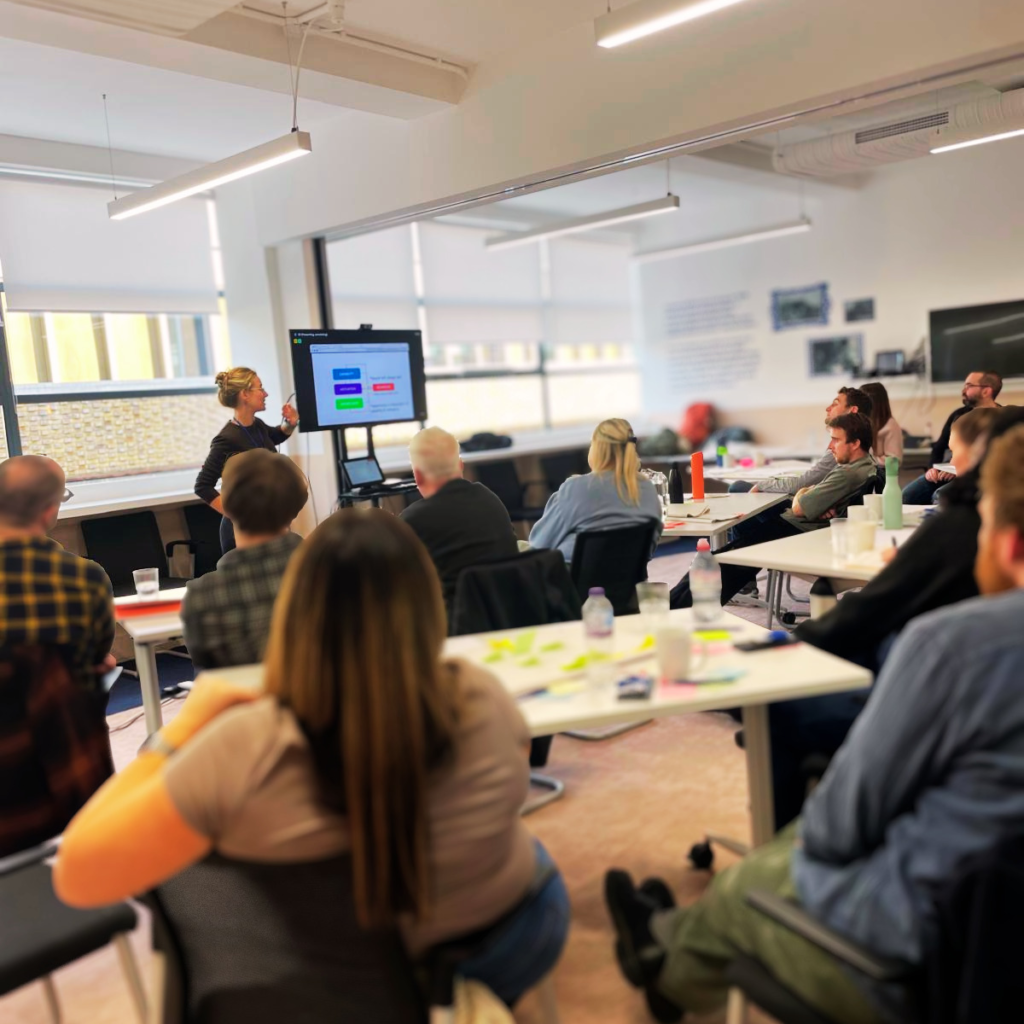
That same sensibility shapes her view of rigour. “You’re applied in the field,” she says. The academics are in labs. Practitioners are in motion, forming hypotheses, noticing active ingredients, trying to work out what is actually moving anything. That still needs discipline. It still needs feedback. It still needs some way of knowing whether the thing worked. But it is not the same as pretending behaviour will line itself up neatly just because a framework says it should. As she puts it, the work needs “taking the frameworks but allowing the spaciousness of life to come in.”
You start to hear the same sensibility in places that sit well outside client work. The day before our chat, Heather had been at church. Someone wanted prayer. As the woman spoke, Heather could tell that what was being said was close to the thing, but not quite the thing itself. She stayed with her, nudged gently, kept listening until the feeling underneath appeared. “The directed spaciousness is the way I’d describe it,” she says.
It is a phrase that gets close to how she seems to work more generally. Spacious enough for the real issue to show up. Directed enough that you do not get lost before it does. She does not seem especially interested in crowning the first frame as the right one. She seems more interested in staying with the mess long enough for the real shape of it to appear, then helping cut.

That same sensibility runs into the question of ethics as well. She is clear that effectiveness, on its own, does not settle much.
One example has stayed with her from her Ogilvy days. Sam Tatam, she recalls, used to talk about a project in Australia involving KFC. The work used anchoring to shift what counted as a normal amount of fries. It worked brilliantly. Sales rose. On one level, that is clean, sharp behavioural work. On another, she says now, it helped drive obesity. And that Sam would use the project of an example where behaviour work stepped over a line. She talks about tobacco in the same spirit. Vapes. The kinds of clients and categories where the commercial logic is tidy enough, and the moral edges are not. Agency life, in that sense, can be commercially sharp and ethically murky at the same time.
What makes her interesting on this is that she does not try to tidy it into a clear position and move on. She talks instead about slippage. How work can go sideways by increments. How the interesting project, the clever challenge, the invoice that needs paying, can all muddy the water a bit. One of the best protections, she thinks, is knowing your own weak spots.
Her own, she says, is work that is “really f*ing interesting”. Fascination can bend her judgement. She knows that about herself. She also knows that moral clarity often gets tested at exactly the point where money, scarcity, and real life start pressing in. In a way, it was a refreshing take on the ethics topic within our industry.
That is part of why the way she talks about the work never stays purely methodological for long. It keeps coming back to people, their motives, their blind spots, the stories they tell themselves about what they are doing. It also keeps coming back to conditions. By the time she talks about macro and micro levels, or the limits of rigour, or the fantasy that behaviour can be cleanly managed from above, she is not making a tidy theory point. She is describing what the work has actually felt like from the inside.
You can hear that in how she describes what she offers now. It sounds less like revelation than partnership. She gives one example of working with a small company in the UK where the conversation seemed, at first, to be about products and activation. Then it wandered into boredom, relationships, all the noise around the business, all the human turbulence around it. By the end, she says, the useful thing had surfaced.
There was no grand plan that led her here. At school she was, as she puts it, “shoved in the library” with a pile of prospectuses and told to decide what to do. Economics taught her early that two lines on a page do not describe everything, and that apparently dry systems turn moral surprisingly quickly. Health economics brought her into contact with framing and survey design. Nudge led to choice architecture. Choice architecture led to ethnography and front-end research. Then, gradually, came a pulling away from the parts of the field that had started to feel too shallow. In retrospect it forms a neat path. At the time, it did not feel neat at all.
She has been nomadic for the last three years. Some of her current work sits closer to resilience, collaboration, regeneration. Later in the conversation she says, half laughing, that she has “gone too spacey” and wants to come back and do things.
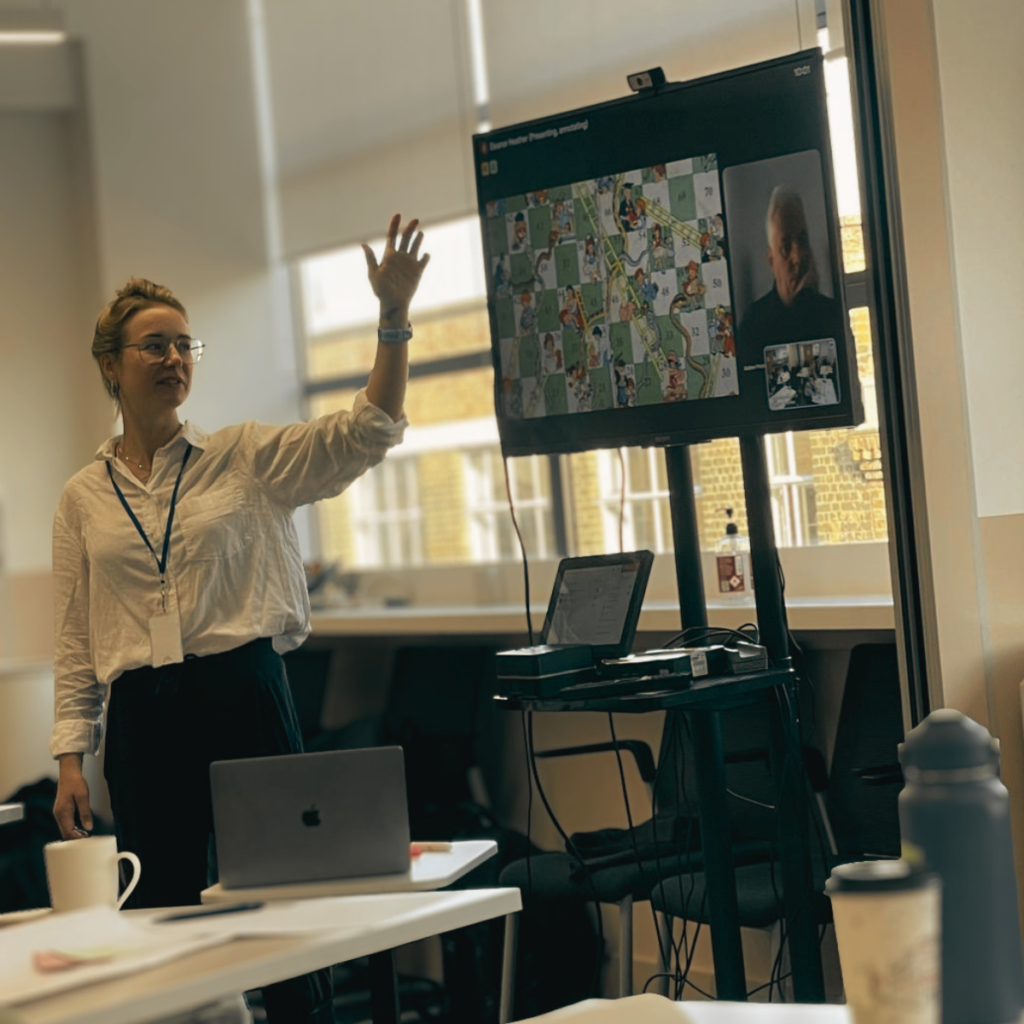
That phrase she wrote down near the start, “professional that plays”, begins to feel less like a slogan and more like a working description. It does not feel light or glib. It feels like alertness. A way of working that stays open enough for reality to interrupt the model, but not so open that nothing ever gets named or done.
Heather is still working out the shape of the practice that follows from that. She says so. The mind here is still testing where to look, what to widen, what to cut, and what kind of question a situation can really hold. For someone so interested in level, judgement, and what is actually alive in the room, a finished doctrine would almost be the wrong ending.
Eleanor shares thought pieces on LinkedIn and is currently building Someone, a strategic thinking partner for complex questions, messy decisions, and ideas buried under mental noise.
LinkedIn
Read Eleanor’s writing and follow her work
Someone
Book a clarity call with Someone


